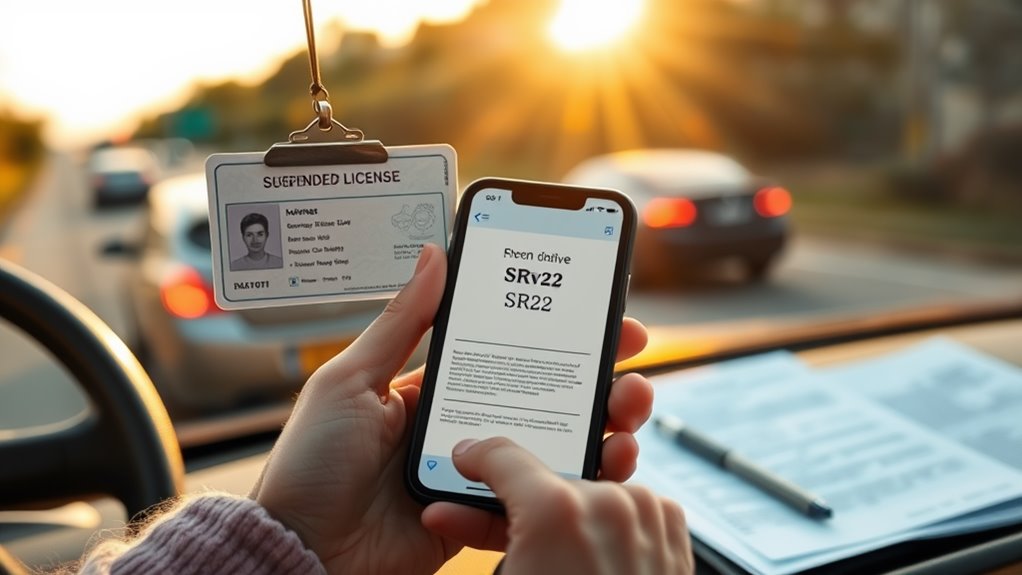
Sr-22 Insurance in California

Did you know that nearly 1 in 10 drivers in California may need SR-22 insurance due to serious traffic violations? This certificate proves your financial responsibility and is vital for reinstating your driving privileges. Understanding its requirements and implications can save you from hefty penalties. But what exactly does the SR-22 process entail, and how can it impact your insurance rates? Let’s explore the essentials.

Key Takeaways

  • SR-22 is a certificate proving financial responsibility required after serious traffic offenses, like DUIs, in California.
  • Minimum liability coverage in California is $15,000 per person and $30,000 per accident for bodily injury.
  • SR-22 must be filed electronically by licensed insurance providers within one business day after obtaining the necessary documentation.
  • A lapse in SR-22 coverage can lead to immediate license suspension and higher future insurance premiums.
  • SR-22 requirements typically last from three to five years, depending on the severity of the offense.

What Is SR-22 Insurance?

sr 22 financial responsibility document

Although many people refer to it as “SR-22 insurance,” it’s actually a document proving your financial responsibility rather than a specific type of insurance.

In California, this form guarantees that you maintain the minimum required auto insurance coverage after serious traffic offenses, such as DUIs. Your insurance company files the SR-22 with the state, confirming your continuous coverage at required levels. Specifically, California mandates minimum liability limits: $15,000 for bodily injury per person, $30,000 per accident, and $5,000 for property damage.

Insurance providers, such as Mercury, Geico, and Progressive, offer SR-22 services and may charge additional fees. It is important to note that SR-22 is required for a specified period, typically three years, but can extend to five years based on driving offenses.

You’ll need to maintain this document for three to five years, depending on your offense’s severity, to avoid license revocation.

Purpose of SR-22 in California

The purpose of an SR-22 in California is to guarantee you meet legal compliance with state insurance requirements. It serves as proof of financial responsibility, demonstrating that you carry the minimum auto insurance coverage. Additionally, obtaining an SR-22 is often an essential step in the license reinstatement process after serious traffic violations. An SR-22 is typically required for high-risk drivers after certain offenses such as DUI or reckless driving.

When you’ve faced serious driving offenses in California, an SR-22 serves as a crucial legal compliance requirement. This document guarantees that you meet the state’s insurance mandates following specific infractions. Here’s what you need to know:

  • DUI or DWI Convictions: An SR-22 is often mandated after such offenses.
  • License Suspension: If your license is suspended, you’ll likely need an SR-22 for reinstatement.
  • Multiple Traffic Violations: Accumulating points can trigger this requirement.
  • Filing Process: Your insurance company files the SR-22 with the DMV, guaranteeing compliance.

Understanding these legal implications helps you maintain your driving privileges and avoid further penalties.

Always keep your insurance status updated to stay compliant.

Financial Responsibility Proof

In California, having an SR-22 is essential for proving your financial responsibility on the road. This certificate demonstrates that you meet the state’s minimum auto insurance requirements, ensuring you’re liable for any accidents or damages.

Your insurance company files the SR-22 form with the California DMV, confirming your compliance with the law. Typically required after serious traffic offenses, the SR-22 also notifies the DMV of any changes to your insurance status, such as cancellations or lapses.

License Reinstatement Process

Maintaining an SR-22 is key to getting your suspended or revoked driver’s license reinstated in California.

To navigate this process effectively, follow these steps:

  • Contact the DMV: Start by confirming the specific requirements for your situation.
  • File a New SR-22: If your previous SR-22 has lapsed, guarantee a new certificate is filed with your insurance provider.
  • Pay Reinstatement Fees: Be prepared to cover any fees associated with the reinstatement process.
  • Submit Proof of Insurance: Once your SR-22 is active, submit the necessary documentation to the DMV.

Coverage Requirements for SR-22

SR-22 insurance in California comes with specific coverage requirements designed to protect both drivers and others on the road.

You must carry a minimum of $15,000 for bodily injury liability per person and $30,000 per accident. Additionally, property damage liability requires a minimum of $5,000 per accident.

These coverage types guarantee compliance with state laws, especially for high-risk drivers who may have past infractions like DUI or reckless driving.

While uninsured and underinsured motorist coverage is often available, you can decline it in writing.

It’s essential to maintain these coverage levels for the duration of your SR-22 requirement, which typically lasts between three to five years, to avoid further penalties or license suspension.

Filing Process for SR-22

sr 22 filing compliance steps

When you need to file for SR-22 insurance in California, understanding the process can help you avoid complications.

Follow these steps to guarantee compliance:

  • Choose a licensed provider: Only California insurers authorized to file SR-22s can assist you.
  • Prepare necessary documentation: Have your DMV confirmation letter and proof of minimum liability coverage ready.
  • Submit to the DMV: Your insurer must file the SR-22 electronically within one business day.
  • Maintain ongoing compliance: Ensure there’s no lapse in coverage, as it restarts the SR-22 requirement.

Common Triggers for SR-22 Requirement

Several situations can trigger the need for an SR-22 in California.

If you face a DUI conviction or get into an accident while uninsured, you’ll likely be required to file an SR-22.

Understanding these common triggers can help you avoid potential legal complications and guarantee compliance with state regulations.

DUI Convictions

A DUI conviction is one of the most common triggers for needing an SR-22 in California. When you face a DUI, your insurance provider must file the SR-22 with the DMV to confirm you meet the state’s minimum auto liability coverage requirements.

This certification is mandatory and isn’t insurance itself, but rather a verification tied to an active policy.

  • You’ll need a minimum coverage of 30/60/15.
  • Expect three years of continuous SR-22 maintenance.
  • Your license may face a six-month suspension.
  • Insurance premiums often double or triple post-conviction.

Understanding these aspects can help you navigate the consequences of a DUI and restore your driving privileges more smoothly.

Uninsured Accidents

If you find yourself in an accident without insurance, you’ll likely trigger the requirement for an SR-22 in California. This certificate of financial responsibility shows you meet the state’s minimum insurance requirements after being uninsured during an accident.

You’ll need to maintain the SR-22 for three years, proving your financial responsibility. If you’re found at fault, you’re fully responsible for all damages and costs, which can lead to significant financial burdens.

Additionally, failing to comply can result in license suspension and higher insurance premiums in the future. Your insurer will file the SR-22 with the DMV, which monitors your insurance status closely to guarantee compliance.

Understanding these implications is essential for maintaining your driving privileges and financial stability.

Cost Impact of SR-22 on Insurance Premiums

While obtaining SR-22 insurance in California is vital for reinstating your driving privileges after certain violations, it can greatly impact your insurance premiums. Your costs may soar due to the nature of your violation, and here’s what you can expect:

  • Average annual premiums range from $800 to $1,600.
  • DUI convictions can hike premiums by 70–200%.
  • Filing fees typically range from $25 to $40.
  • Younger drivers and those with multiple violations face higher rates.

Consequently, you might find your premiums doubling or even tripling post-violation.

Maintenance and Compliance With SR-22

Maintaining compliance with your SR-22 is vital for keeping your driving privileges intact in California.

You’ll need to keep your SR-22 certificate active for 3 to 5 years, depending on the reason for its issuance, such as a DUI conviction or an uninsured accident.

It’s essential that your insurance policy covers all vehicles you own or regularly drive.

If your driving privileges are reinstated, you still must maintain the SR-22 to avoid further complications.

Your insurance company will file and update the SR-22 with the DMV, so make sure your policy never lapses.

Non-compliance can lead to license suspension, fines, and additional penalties, complicating your path to regaining full driving rights.

Stay proactive to avoid these issues.

Non-Owner SR-22 Policies Explained

non owner liability insurance explained

If you don’t own a vehicle but need to meet SR-22 requirements, a non-owner SR-22 policy might be the right fit for you.

This liability-only coverage provides vital protection while you drive borrowed or rented vehicles, but it comes with specific limitations.

Understanding the filing process and coverage details is important to guarantee you maintain compliance and avoid any lapses.

Definition of Non-Owner SR-22

Non-owner SR-22 insurance serves as an essential safety net for drivers who don’t own a vehicle but still need to demonstrate financial responsibility. This type of liability coverage is vital for individuals with suspended licenses due to traffic violations or DUIs, allowing them to legally drive borrowed vehicles.

Key aspects include:

  • Proof of Financial Responsibility: Required to reinstate your license in states like California.
  • Eligibility for High-Risk Drivers: Necessary for those with serious traffic offenses.
  • Flexibility: Covers driving vehicles you don’t own or regularly access.
  • Legal Mandate: Often enforced by courts or state departments after severe infractions.

This coverage helps you meet state requirements while providing essential protection on the road.

Coverage and Limitations

While steering through the complexities of non-owner SR-22 insurance in California, it’s crucial to understand the specific coverage and limitations that come with these policies.

Your non-owner SR-22 provides state-mandated liability coverage for bodily injury and property damage but excludes physical damage coverage since you don’t own a vehicle. Typically required for three years, any lapse resets your filing period.

This policy only covers non-owned vehicles, meaning borrowed cars or rentals, but excludes household vehicles. You won’t have coverage for ride-sharing services or financed vehicles.

While costs are generally lower, it’s a temporary solution until you can secure standard insurance. Remember, it prioritizes liability and offers minimal financial protection.

Filing Process Overview

Maneuvering the filing process for a non-owner SR-22 policy in California involves several key steps to guarantee compliance with state regulations. You’ll need to follow these essential actions:

  • Contact a CA-licensed insurer that offers non-owner SR-22 policies.
  • Purchase liability insurance that meets the state’s minimum requirements of $15,000/$30,000/$5,000.
  • Confirm your insurer files the SR-22 form with the CA DMV, either electronically or via mail.
  • Pay the filing fee, which typically ranges from $15 to $25.

Maintaining this coverage for at least three years is imperative to avoid license suspension.

Consequences of Lapse or Cancellation of SR-22

If you let your SR-22 lapse or get canceled, you’ll face serious consequences that can impact your driving privileges and finances.

Letting your SR-22 lapse can lead to license suspension and increased insurance costs, impacting your finances and driving privileges.

The DMV will immediately suspend your license, requiring you to pay reinstatement fees to get it back. This suspension can also complicate vehicle registration for your owned cars.

Expect higher future insurance premiums, as a lapse can signal risk to insurers. Additionally, you may incur legal penalties, including fines for driving without proper coverage.

Your SR-22 requirement period may reset, extending the time you must maintain coverage. Driving without valid insurance could even lead to vehicle impoundment, adding more costs to your situation.

Staying compliant is essential to avoid these complications.

Transferring SR-22 Insurance Out of California

Transferring your SR-22 insurance out of California can seem challenging, but understanding the process can make it manageable. Here’s what you need to know:

  • No direct transfer between states: You’ll need to re-file your SR-22 in your new state.
  • Maintain your California policy: Avoid lapses in compliance by keeping your CA coverage until your new one is active.
  • Overlap coverage: Guarantee there’s a 5–7 day overlap between policies for continuous compliance.
  • State-specific requirements: Comply with your new state’s liability limits and regulations.

Remember to notify the CA DMV of your move and confirm your new insurer can handle multi-state filings.

Keeping these details in mind will simplify your change and help you stay compliant.

Frequently Asked Questions

Can I Drive With an SR-22 in Another State?

You can drive in another state with an SR-22, but you must maintain compliance with your original state’s requirements. Make sure to notify both states of your relocation to avoid any lapses in coverage.

How Long Does It Take to Process an SR-22?

Picture a clock ticking; it usually takes around 30 days to process an SR-22. During this time, your license might remain suspended, so staying proactive with your insurance is essential for a smooth reinstatement.

What Happens if I Miss an SR-22 Payment?

If you miss an SR-22 payment, your insurance may lapse, leading to license suspension, increased premiums, and potential legal penalties. Reinstatement fees could also apply, creating further financial burdens down the road. Stay proactive.

Can I Cancel My SR-22 Before the Compliance Period Ends?

Canceling your SR-22 early is like cutting a thread before the fabric’s finished; it unravels consequences. You risk license suspension and reinstatement fees. Always consult your insurer and the DMV before making that decision.

Do All Insurance Companies Provide SR-22 Filings?

Not all insurance companies provide SR-22 filings. Some major carriers do, but specialized insurers often cater to high-risk drivers. It’s crucial to check with your provider to confirm their SR-22 filing options.

Conclusion

In the end, maneuvering SR-22 insurance in California can feel like a necessary evil, especially when you’re just trying to get back on the road. Ironically, the very document intended to restore your freedom can sometimes make you feel more trapped. Yet, by understanding its requirements and maintaining compliance, you can turn this burden into a stepping stone toward better driving habits. Embrace the process, and soon you’ll be enjoying the open road again—legally, of course!


Top 3 Affordable Insurance Options in California

Charting the intricate web of health insurance options in California can feel like wandering through a maze. You want quality coverage without breaking the bank, and several choices stand out. Kaiser Permanente, L.A. Care, and Anthem offer distinct benefits tailored to different needs. Each option reflects a commitment to affordability and accessibility, but the nuances matter. Which plan aligns best with your lifestyle and financial goals? The answer could redefine your healthcare experience.

Key Takeaways

  • Kaiser Permanente offers competitive rates with plans starting around $434 monthly, providing comprehensive services through a coordinated care model.
  • L.A. Care is the largest publicly operated health plan in the U.S., with plans starting at $354, focusing on low-income individuals and families.
  • Anthem provides a variety of health insurance options at different price points, including PPO plans for greater flexibility in provider choice.
  • Kaiser Permanente's Silver plan is particularly affordable and offers extensive coverage for essential health services.
  • L.A. Care emphasizes cultural support and community partnerships, enhancing accessibility and affordability for Los Angeles residents.

Kaiser Permanente: Quality Coverage at Competitive Rates

affordable health insurance options

While many insurance providers offer various plans, Kaiser Permanente stands out in California for its quality coverage and competitive rates. Operating as an HMO with a closed network, Kaiser provides individual and family plans across four metal tiers: Bronze, Silver, Gold, and Platinum.

The cheapest Silver plan costs around $434 monthly, making it accessible for many. Their plans are designed for different needs—Bronze for low premiums, Gold for frequent users seeking lower deductibles. Additionally, all care is coordinated through a primary care physician, ensuring that members receive comprehensive and integrated services. It's important to note that SR-22 insurance may be necessary for certain individuals, particularly those with specific driving violations, making Kaiser's offerings even more relevant for those seeking affordable options.

With high customer satisfaction ratings, Kaiser emphasizes streamlined care through its integrated app, allowing you to manage appointments and benefits easily. Additionally, coverage features like doula services and behavioral health support enhance its appeal, solidifying Kaiser Permanente as a top choice for affordable insurance in California.

L.A. Care: Affordable Options for Los Angeles Residents

For Los Angeles residents seeking affordable health insurance, L.A. Care offers a range of options tailored to low-income individuals and families. Established in 1997, it's the largest publicly operated health plan in the U.S., serving over 1.8 million members.

L.A. Care provides plans like Medi-Cal, which is free or low-cost for eligible individuals, and L.A. Care Covered for families. With monthly rates starting at $354, it's recognized for being one of the cheapest options in California.

Remarkably, the health plan emphasizes cultural support, offering interpretation services in over 50 languages. By partnering with local organizations, L.A. Care enhances its services, ensuring thorough care remains accessible and affordable for all Los Angeles residents.

Anthem: Diverse Plans for Various Needs

Anthem provides a variety of health insurance plans designed to meet diverse needs, ensuring that individuals and families can find coverage that fits their unique circumstances.

You can explore extensive health plans that include medical, dental, vision, pharmacy, and mental health services. With various price points, you're likely to find a plan that suits your budget.

The Anthem PPO plan offers flexibility, allowing you to access any doctor or hospital, often at lower costs for in-network providers. Plus, you'll benefit from no-cost preventive care, critical illness coverage, and supplemental insurance options.

The Anthem PPO plan provides flexibility with access to any doctor or hospital, along with valuable benefits like no-cost preventive care.

Anthem's technology, like the mobile app and 24/7 health support, makes managing your healthcare simple and efficient, enhancing your overall experience.

Conclusion

In California, choosing the right health insurance can make all the difference. With Kaiser Permanente's coordinated care, L.A. Care's commitment to accessibility, and Anthem's flexible options, you have a variety of affordable choices. Curiously, nearly 30% of Californians rely on Medi-Cal for their health coverage, highlighting the importance of finding a plan that meets your needs. By exploring these options, you can secure not just coverage, but peace of mind for you and your family's health.

7 Tips for Submitting Your SR22 Form

Submitting your SR22 form can feel like maneuvering through a labyrinth, but you don't have to go it alone. By following a few key tips, you can simplify the process and guarantee you meet all requirements. From understanding California's specific guidelines to keeping tabs on your insurance status, there's a lot to take into account. So, what steps should you take to stay compliant and avoid penalties? Let's break it down.

Key Takeaways

  • Choose an insurance provider that specifically offers SR22 policies to ensure compliance with state requirements.
  • Gather all necessary documentation, including your driver's license info and details of any convictions or license suspensions.
  • Confirm that your insurance policy meets California's minimum liability coverage requirements before submitting the SR22 form.
  • Ensure continuous insurance coverage during the SR22 period to avoid penalties and maintain driving privileges.
  • Regularly check your SR22 status with the DMV to ensure it remains active and compliant.

Understand California SR22 Requirements

california sr22 insurance requirements

Understanding California SR22 requirements is vital if you find yourself needing to prove financial responsibility after specific driving offenses.

An SR22 is a Certificate of Financial Responsibility that shows you meet California's minimum insurance coverage standards. You'll likely need it after incidents like DUI, reckless driving, or driving without insurance. SR22 serves as proof of minimum liability coverage for high-risk drivers mandated by the state. Additionally, the SR22 insurance policy is specifically designed to help rehabilitate drivers by allowing them to demonstrate compliance with state laws.

An SR22 is essential for demonstrating financial responsibility in California, particularly after serious driving violations.

While the filing cost is typically low, be prepared for potential increases in your insurance rates due to your high-risk status. This requirement generally lasts between three to five years and is significant for reinstating a suspended or revoked license.

Make sure you maintain continuous coverage, as any lapses can lead to further penalties and suspension of your driving privileges.

Choose an Insurance Provider

Choosing the right insurance provider for your SR22 needs is crucial to guaranteeing both compliance and affordability. Here are some factors to take into account:

  1. Cost: Progressive offers the lowest average rate at $662, while State Farm balances affordability and quality at $782.
  2. Discounts: Look for providers like Progressive and State Farm that offer various discounts for multi-policy, bundling, and safe driving.
  3. Coverage Options: Confirm the provider offers necessary coverages like liability, extensive, and collision.
  4. Reputation and Stability: Check ratings from AM Best and J.D. Power to assess financial stability and customer satisfaction.

Gather Necessary Documentation

Before you can submit your SR22 form, you'll need to gather essential documentation to guarantee a smooth process.

Start by collecting your driver details, including your date of birth, Social Security number, and driver's license information. Document your license suspension dates and the reasons behind them, along with any related convictions like DUI.

Ascertain you have your insurance policy details, confirming it meets state minimum liability requirements and includes SR22 coverage.

Don't forget to organize legal documents such as court orders and police reports. Gather notifications from the DMV and previous insurance records.

Finally, prepare to provide any necessary identification, ensuring all information is accurate and up-to-date for a successful submission.

Initiate the SR22 Filing Process

start sr22 filing procedure

Once you've gathered all necessary documentation, you can start the SR22 filing process. Here's how to initiate it effectively:

  1. Choose an Insurance Provider: Research and select an insurance company that offers SR22 policies. Not all providers do.
  2. Purchase Your SR22 Policy: Once you've chosen a provider, set up your SR22 policy to meet the minimum liability requirements.
  3. File with the DMV: The insurance company will handle the actual filing of the SR22 form with your state's DMV.
  4. Maintain Continuous Coverage: Confirm you keep your insurance active throughout the SR22 period to avoid penalties.

Ensure Compliance With Payment

To guarantee compliance with payment requirements for your SR22, it's essential to understand the various costs involved. You must budget for the minimum liability coverage mandated in Texas, which includes $30,000 for bodily injury to one person, $60,000 for multiple persons, and $25,000 for property damage.

Additionally, prepare for the SR22 filing fee, typically ranging from $15 to $50, as well as the upfront premium payment that may require six to 12 months' worth. Be aware that any lapse in coverage can lead to penalties, including a $100 reinstatement fee.

Finally, consider potential premium increases due to your high-risk status and explore payment plans offered by some insurers to manage costs effectively.

Monitor Your SR22 Status

Monitoring your SR22 status is essential to maintaining compliance and avoiding penalties. Regularly checking your status guarantees you meet state requirements and retain your driving privileges.

Here are some steps to help you stay on top of your SR22:

  1. Contact Your State DMV: Verify your SR22 status through your state's Department of Motor Vehicles.
  2. Gather Required Info: Have your driver's license and vehicle registration numbers ready for quick access.
  3. Utilize Online Resources: Check if your state offers online portals for easy status updates.
  4. Document Communications: Keep records of any interactions with the DMV for future reference.

Request SR22 Removal When Eligible

sr22 removal eligibility request

As you approach the end of your SR22 requirement, it's important to take the necessary steps for removal to regain standard driving status.

First, verify with your state's DMV that you've completed the required duration, typically ranging from one to five years.

Verify with your state's DMV to confirm you've fulfilled the SR22 duration, generally spanning one to five years.

Notify your insurance provider to request SR22 removal and make sure they file an SR-26 form with the state.

Remember, premature removal can lead to license suspension, so timing is key.

Maintain continuous insurance coverage throughout the SR22 period.

Once removed, consider shopping for new insurance quotes, as rates may decrease based on your driving record.

Staying compliant with state regulations will help you shift smoothly back to standard insurance options.

Conclusion

In summary, successfully submitting your SR22 form in California requires careful attention to detail and compliance with regulations. By understanding the requirements, choosing the right provider, and monitoring your status, you can navigate the process smoothly. Have you taken the necessary steps to guarantee your SR22 filing is hassle-free? Remember, maintaining continuous coverage is crucial to avoid penalties and keep your driving privileges intact. Stay informed, and you'll be on the right track!

7 Tips for Canceling Your Insurance After Restoration

Canceling your insurance after restoring your license might seem intimidating, but it doesn't have to be. Understanding the process can save you time and money. You'll want to start by reviewing your SR-22 policy terms to guarantee you meet all obligations. There are several essential steps to follow that can make this change smoother. Let's explore what you need to know to navigate this process effectively.

Key Takeaways

  • Confirm your SR-22 obligations to avoid penalties before canceling your insurance policy.
  • Check your license restoration status through online services or local departments.
  • Notify your insurance provider in writing, specifying cancellation details and effective date.
  • Be aware of potential fees and penalties associated with early cancellation of your policy.
  • Keep records of all communications with your insurer for future reference.

Review Your SR22 Policy Terms

check sr22 policy details

When you're looking to cancel your SR-22 policy, it's crucial to review the terms carefully to confirm you understand your obligations and the implications of cancellation.

Understanding your obligations and the cancellation implications is essential before you cancel your SR-22 policy.

Remember, SR-22 forms are required for serious infractions like DUIs and can last anywhere from 3 to 5 years, depending on your state. High-risk drivers may also face higher insurance premiums even after their SR-22 period ends. Additionally, SR-22 insurance is specifically designed for high-risk drivers to demonstrate their financial responsibility.

The cancellation process typically involves contacting your insurer after the mandatory period ends and submitting the SR-26 form for removal.

Be aware that while insurance rates may increase due to underlying infractions, they could decrease once the SR-22 is removed.

Make sure you're informed about potential filing fees, which usually range from $15 to $25, to avoid any surprises during the process.

Confirm License Restoration Status

After reviewing your SR-22 policy terms and fulfilling the necessary obligations, confirming your license restoration status is the next important step.

You can check your status through various methods:

  • Online Account Creation: Set up an account with your state's department for personalized requirements.
  • License Status Checks: Use mobile apps like DDS 2 Go for real-time updates on your license.
  • Visit Customer Centers: Get in-person help at local service centers for direct consultations.
  • Phone Assistance: Call driver services for inquiries and additional information.

Make certain to gather all required documents and follow the specific instructions to guarantee a smooth restoration process.

Knowing your status will guide you toward the next steps effectively.

Notify Your Insurance Provider

Notifying your insurance provider is an vital step in the process of canceling your policy after license restoration. This action maintains transparency and helps prevent confusion about your policy's status, avoiding unexpected charges or renewals.

To notify them, do it in writing, using email for speed, but consider a certified letter for proof. Include your policy number, clearly state your cancellation request, and specify the effective date.

It's important to send this notification before the next billing cycle to comply with any notice periods outlined in your policy. After sending, follow up to confirm receipt and request written confirmation of cancellation.

Keep records of all communications for future reference to guarantee a smooth changeover.

Understand Potential Fees and Penalties

fees and penalties awareness

Canceling your insurance policy can lead to various fees and penalties that you should understand before making your decision. Here are some key points to take into account:

  • Cancellation Fee Types: You might face flat fees or percentage-based fees upon cancellation.
  • Short Rate Penalties: Early cancellations often incur penalties greater than the pro-rated share.
  • Administrative Costs: Fees may cover administrative costs associated with processing the cancellation.
  • Pro-Rated Refunds: Refunds are typically prorated, but deductions for fees will lower the final amount.

It's essential to review your policy documents for specific terms, timing, and provider rules to avoid unexpected charges.

Understanding these potential costs can help you navigate the cancellation process more effectively.

Explore Alternative Insurance Options

When considering your options after canceling your insurance policy, it's crucial to explore alternative insurance solutions that can meet your needs without leaving you vulnerable.

One effective approach is self-insuring, where you set aside funds for future claims. You might also consider hybrid policies that combine life insurance with additional coverage options.

Platforms like GoFundMe can provide community support through crowdfunding during difficult times. If your risks are specialized, exploring excess and surplus lines insurance could be beneficial.

Additionally, long-term care annuities and life insurance riders can offer you broader coverage.

Finally, implementing risk reduction measures and budgeting for potential risks can further enhance your financial stability while shifting from traditional insurance.

Keep Documentation Organized

Keeping your documentation organized is essential for guaranteeing easy access and maintaining compliance throughout your insurance journey. A well-structured system helps you manage your insurance documents effectively.

Here are some key tips to keep in mind:

  • Categorize Documents: Sort by policy type (health, auto, home) and further by specifics like claim details.
  • Utilize Digital Tools: Leverage AI-driven platforms for secure storage and easy collaboration among stakeholders.
  • Set Reminders: Create alerts for policy renewals or updates to stay on top of your documentation.
  • Regular Updates: Update your system promptly after any changes to guarantee accuracy and compliance.

Inform the DMV of Policy Changes

notify dmv about updates

Maintaining organized documentation prepares you for any necessary updates to your insurance policies, including informing the DMV of changes.

Before canceling your insurance, notify the DMV promptly to avoid potential registration suspension or penalties. States like California and Nevada have strict guidelines regarding continuous coverage; for example, California requires immediate notification along with proof of new insurance to prevent suspension.

You can typically update your insurance information online, by phone, or via mail, depending on your state's procedures. Be aware that additional documentation, such as SR-22 forms, may be required in certain situations.

Staying proactive with your DMV notification helps guarantee compliance and avoids unnecessary fines or registration issues.

Conclusion

In conclusion, canceling your insurance after restoration requires careful attention to detail. Review your SR-22 terms, confirm your license status, and notify your provider promptly. Understand potential fees, explore new coverage options, and keep your documentation organized. Finally, inform the DMV of any policy changes. By following these steps, you guarantee a smooth changeover, protect your rights, and maintain peace of mind as you move forward on your driving journey.

7 Best Ways to File SR22 Insurance Non-Owner

If you're a non-owner driver needing SR22 insurance, understanding the process can save you time and frustration. You'll want to start by researching reliable insurance providers and verifying your state's specific requirements. Gathering the necessary documentation is essential for a smooth application. But that's just the beginning; there are several key steps to guarantee you file correctly and maintain compliance. Let's explore these best practices to help you navigate the process effectively.

Key Takeaways

  • Research and compare quotes from major insurance providers like Allstate, Geico, and Progressive for non-owner SR22 policies.
  • Verify your state's specific SR22 requirements and ensure compliance with minimum liability coverage.
  • Gather necessary documentation such as your driver's license, proof of residency, and driving history before applying.
  • Use online insurance brokerages to easily compare multiple quotes and find affordable non-owner SR22 options.
  • Complete the application accurately and request your insurer to file the SR22 form with the state DMV promptly.

Research Insurance Providers Offering Non-Owner SR22

non owner sr22 insurance providers

When you're looking for non-owner SR22 insurance, it's crucial to research various insurance providers to find the best fit for your needs.

Start by considering major companies like Allstate, State Farm, and Geico, which offer non-owner SR22 policies. High-risk insurance specialists like The General and SR22 Savings can also assist you in finding tailored options. SR-22 is a certificate of insurability, which means that it is important to ensure the provider can file the necessary documentation with the state. Additionally, be aware that SR-22 insurance in California is often required for drivers who have had their licenses suspended due to violations.

Consider major insurers like Allstate, State Farm, and Geico for non-owner SR22 policies, along with specialists like The General and SR22 Savings.

You might find benefits with providers like Progressive, known for their quick electronic SR-22 filings. Online insurance brokerages, such as Bankrate, allow you to compare quotes easily.

Don't forget to evaluate customer support and the ability to file SR-22 forms, as these factors can greatly affect your experience.

Make informed choices to guarantee you meet your state's requirements efficiently.

Verify State Requirements for Non-Owner SR22 Insurance

Before securing non-owner SR22 insurance, it's vital to verify the specific requirements set by your state, as these can vary considerably.

Generally, non-owner SR22 insurance is required for drivers with serious infractions, like DUI/DWI convictions, who don't own a vehicle. You'll need to make sure your coverage meets your state's minimum liability insurance requirements, which differ from one state to another.

Be aware that the filing fee for an SR22 is typically around $25, but overall policy costs can vary as well. It's important to maintain continuous coverage to avoid penalties and guarantee compliance with state regulations.

Check with your local DMV or insurance provider for details specific to your location to avoid complications.

Gather Necessary Documentation for Application

After you've verified your state's requirements for non-owner SR22 insurance, the next step involves gathering the necessary documentation for your application.

Start by collecting basic identification, including your driver's license number, full name, birth date, social security number, and residential address.

Collect essential identification details like your driver's license number, full name, birth date, social security number, and residential address.

Next, provide proof of residency through recent utility bills, lease agreements, or bank statements.

Don't forget to review your driving history, as accident records, traffic violations, and any license suspensions may be required.

Additionally, check for your state's specific insurance policy requirements, such as minimum liability coverage and SR-22 filing fees.

Finally, confirm your eligibility by ensuring you don't own a vehicle and meet any state mandates.

Request Quotes and Compare Coverage Options

compare insurance quotes options

Requesting quotes and comparing coverage options is an essential step in securing non-owner SR-22 insurance. Start by reaching out to reputable companies like Allstate, Farmers, Geico, and Progressive, which offer non-owner SR-22 policies.

Remember, the average filing fee is around $25, but this can vary by state and insurer. Prices fluctuate considerably based on location, with states like Florida being more expensive than Iowa.

Make sure to evaluate various factors influencing costs, such as DUI offenses or multiple traffic violations. By comparing multiple quotes, you can identify the most affordable policy that meets your needs, ensuring you find the best coverage without overspending.

Take the time to shop around; it pays off in savings.

Complete the Application Process With Chosen Insurer

Once you've gathered quotes and chosen the right insurer for your non-owner SR-22 insurance, it's time to complete the application process.

Start by collecting necessary documentation, including your driver's license information, driving history, and prior insurance records. Most insurers offer user-friendly websites that guide you through the online application.

Confirm all entered details are accurate to avoid discrepancies later. Typically, you'll need to provide your driver's license number, SR-22 requirements, and personal information.

Once completed, submit your application directly through the insurer's platform. Don't hesitate to reach out for follow-up support if you have any questions.

This thorough approach will help you secure your SR-22 policy smoothly and efficiently.

Ensure SR22 Form Filing Is Handled by Your Insurer

Ensuring your insurer handles the SR22 form filing is essential for maintaining compliance with state regulations.

When you purchase a non-owner SR22 policy, inform your insurance provider that you need them to file the SR22 form with the state DMV. Not every insurer offers SR22 filings, so it's vital to choose one that does.

When obtaining a non-owner SR22 policy, ensure your insurer can file the SR22 form with the DMV.

Your insurer will typically submit the form electronically or by mail, depending on state requirements. Once filed, they'll notify the state that you have the necessary coverage.

Keep in mind that if you fail to pay your premiums, your insurer may cancel the SR22 policy, which could lead to license suspension. Stay proactive to avoid these issues.

Maintain Continuous Coverage to Avoid Penalties

avoid penalties with coverage

Maintaining continuous coverage is essential for anyone holding a non-owner SR22 insurance policy to avoid penalties and guarantee compliance with state laws.

A lapse in your policy can lead to significant consequences, including extended SR22 requirements and license suspension.

To keep your coverage intact, consider these strategies:

  1. Make Timely Payments: Confirm your premiums are paid on time to avoid lapses.
  2. Regularly Check Policy Status: Stay informed about your coverage status to prevent unexpected issues.
  3. Notify Your Insurer of Changes: Inform your insurer about any changes that may affect your policy, like moving or changes in your driving habits.

Conclusion

Filing SR22 insurance for non-owner drivers doesn't have to be overwhelming. By following these best practices, you can simplify the process and stay compliant. Did you know that nearly 20% of drivers required to file SR22 insurance don't maintain continuous coverage? This can lead to hefty penalties. By researching providers, understanding state requirements, and keeping your policy active, you'll not only meet your obligations but also protect yourself on the road. Stay informed and drive safely!

7 Best Factors Influencing SR22 Insurance Eligibility

Did you know that nearly 30% of drivers who need SR22 insurance have a history of DUI/DWI convictions? This statistic highlights the complexity of SR22 eligibility, which hinges on several key factors. Understanding these elements can help you navigate your situation more effectively. From repeat traffic offenses to compliance with state regulations, there's much more to explore about what influences your eligibility for this essential coverage.

Key Takeaways

  • Driving history, including DUI/DWI convictions and repeat traffic offenses, significantly impacts SR22 insurance eligibility and premiums.
  • Length of time required for maintaining SR22 coverage varies based on the severity and frequency of offenses.
  • State-specific regulations determine SR22 filing requirements, including minimum liability coverage and duration of coverage needed.
  • Continuous insurance coverage is essential; failure to maintain it can lead to penalties and extended SR22 filing periods.
  • Involvement in uninsured accidents often triggers SR22 requirements, marking drivers as high-risk and affecting eligibility.

DUI/DWI Convictions

drunk driving legal penalties

When you face a DUI or DWI conviction, it often triggers the need for SR22 insurance as a prerequisite for restoring your driving privileges. This SR22 isn't traditional insurance but a certificate proving you have the minimum liability coverage required by your state. Depending on where you live, such as in Florida, you might've to carry higher coverage levels. The SR22 insurance is not a type of insurance but a form obtained from the SOS or DMV, which serves as proof of your financial responsibility. Additionally, SR-22 insurance in California can vary in cost and requirements based on your driving history and the specifics of your offense. The duration for maintaining SR22 typically spans three years, but it can extend with multiple offenses. It's essential to guarantee continuous coverage, as any lapse can lead to further penalties and potential suspension of your license. Understanding these requirements helps you navigate the complexities of reinstating your driving rights after a DUI conviction.

Repeat Traffic Offenses

Repeat traffic offenses greatly impact your driving record and can result in serious legal and financial consequences. When you accumulate multiple violations, insurance companies categorize you as a high-risk driver, which leads to increased premiums.

Additionally, repeat offenses may trigger penalties such as license suspension, necessitating an SR-22 to reinstate your driving privileges. Depending on state regulations, you might even need a non-owner SR-22 if you don't own a vehicle.

The financial burden extends beyond premiums to include filing fees, often around $25. Furthermore, the severity of your offenses can determine the length of time you must maintain SR-22 coverage, further straining your finances in the long term.

Uninsured Accidents

Uninsured accidents can have significant implications for your driving record and insurance status, as they often lead to the requirement of an SR-22.

When you're involved in an accident without insurance, the state may mandate an SR-22 to guarantee you maintain minimum liability coverage. This requirement varies by state, with most expecting you to hold the SR-22 for several years.

Additionally, your insurance rates will likely surge due to the increased risk associated with uninsured accidents. Not all insurers provide SR-22 filings, particularly for high-risk drivers, so it's vital to find one that does.

Ultimately, adhering to SR-22 requirements demonstrates your financial responsibility and is fundamental for reinstating your license after such incidents.

License Suspension

driving privileges revoked temporarily

License suspension often arises from serious driving infractions that indicate a significant risk to public safety. If your license is suspended, you'll typically need an SR22 to regain your driving privileges.

Here are some common causes that trigger this requirement:

  1. DUI or DWI convictions necessitate mandatory SR22 filings.
  2. Driving without a valid license can lead to suspension and SR22.
  3. Accumulating serious moving violations often requires SR22 documentation.
  4. Failing to maintain insurance coverage might also result in SR22 needs.

States differ in their policies regarding license suspension and SR22 requirements, often involving fines and penalties.

Understanding these factors is essential to maneuvering the reinstatement process and ensuring compliance with your state's regulations.

Multiple Traffic Violations

While accumulating multiple traffic violations might seem like a minor issue, it can greatly impact your driving record and insurance requirements. Each violation marks you as a higher risk, often triggering the need for SR-22 insurance.

Serious infractions, such as reckless driving or speeding, lead to increased premiums. If you've had several offenses in a short time, you'll likely face higher costs due to the perceived risk.

The type of vehicle you drive further influences your insurance rates, especially if it's newer or more expensive. Understanding these factors can help you navigate the SR-22 process, where maintaining a clean record after filing can ultimately lead to reduced rates over time.

Compliance With State Requirements

To comply with state requirements for SR22 insurance, you must understand that this filing isn't a standalone policy but rather a certification of your existing coverage. Adhering to these regulations is essential for maintaining your driving privileges.

Here are key factors to keep in mind:

  1. Minimum Liability Coverage: Confirm you meet your state's required liability insurance thresholds.
  2. Continuous Coverage: Maintain active insurance throughout the designated filing period to avoid penalties.
  3. Filing Duration: Be aware that the filing period typically lasts at least two years, depending on your offense.
  4. State Regulations: Familiarize yourself with specific state rules regarding SR22 filings, including fees and potential extensions for non-compliance.

Following these guidelines can help you navigate the complexities of SR22 insurance eligibility.

Insurance Provider Notifications

insurance provider communication alerts

Understanding insurance provider notifications is essential for managing SR22 requirements, as these notifications play a significant role in ensuring compliance with state regulations.

Insurance companies automate SR22 filings, transmitting records to the DMV in batches, which streamlines the process. If your SR22 policy is canceled or altered, your provider immediately notifies the DMV, acting as a tracking device.

Many states handle these notifications electronically, reducing errors and expediting processing times. The DMV typically responds the next morning regarding acceptance or rejection.

Additionally, serious offenses like DUIs trigger specific notifications, while various insurance policies, including operator and non-owner types, necessitate distinct SR22 communications.

Conclusion

In conclusion, understanding the factors that influence your SR22 insurance eligibility is vital for traversing the complexities of securing coverage. Just like a well-tuned engine needs all its parts working together, your driving record, state regulations, and compliance with insurance requirements must align to enhance your chances of obtaining SR22 insurance. By addressing issues like DUI convictions and traffic violations promptly, you can improve your eligibility and get back on the road with confidence.

5 Tips for Affordable Non-Owner SR22 Insurance

Finding affordable non-owner SR22 insurance can be challenging, but it doesn't have to be. By following a few practical tips, you can save money while ensuring you meet your insurance requirements. Start by comparing quotes from various providers, and don't forget to look for discounts. Keeping a clean driving record is also essential. Curious about more strategies to secure the best rates? Let's explore the key steps you can take.

Key Takeaways

  • Compare quotes from multiple providers to find the best prices and coverage for non-owner SR22 insurance.
  • Take advantage of discounts by bundling policies, completing defensive driving courses, and opting for autopay.
  • Maintain a clean driving record to avoid incidents that require SR22 and keep premiums lower.
  • Consider enrolling in defensive driving courses, which can enhance skills and lead to insurance discounts.
  • Work with a local insurance agent for tailored advice, compliance guidance, and to identify available discounts.

Compare Quotes From Multiple Providers

evaluate various provider quotes

When comparing quotes for affordable non-owner SR22 insurance, it's essential to focus on several key factors.

Start by comparing prices and premiums from different providers to identify the most cost-effective option. Make sure that each quote offers the same coverage level to make a fair comparison.

Comparing prices and premiums from various providers ensures you find the most affordable SR22 insurance option.

Don't forget to check the SR22 filing fees, as these can vary greatly between insurers. SR-22 is not a type of insurance but rather a certificate proving compliance with state minimum insurance requirements, which is crucial to understand when making your comparisons. Additionally, be aware that SR-22 insurance in California is specifically required for drivers with certain violations.

Consider the ability to customize your policy with additional features, like roadside assistance, to enhance your coverage.

Also, look into customer service reviews to gauge the claims process.

Take Advantage of Discounts

Taking advantage of discounts can greatly lower your non-owner SR22 insurance costs.

Here's how you can maximize your savings:

  1. Bundling Policies: Check if your insurer offers discounts for bundling your non-owner SR22 with other insurance policies.
  2. Defensive Driving Courses: Completing an approved defensive driving class could give you valuable savings.
  3. Payment Method Discounts: Opt for autopay or paperless billing to enjoy potential discounts.
  4. State-Specific Programs: Investigate any state programs that might offer financial assistance or special rates for SR22 insurance.

Maintain a Clean Driving Record

Maximizing discounts can help reduce your non-owner SR22 insurance costs, but maintaining a clean driving record is equally important.

Strictly adhering to traffic laws is essential to avoid incidents that could lead to SR22 requirements. Always wear your seatbelt to prevent accidents and injuries.

Adhering to traffic laws and wearing your seatbelt are crucial for preventing accidents and avoiding SR22 requirements.

Avoid distractions, like texting or eating, while driving, as they greatly increase your risk of accidents. Regularly maintain your vehicle to prevent mechanical failures that could lead to accidents.

Keep safe following distances to avoid rear-end collisions. Address any legal issues promptly and pay fines on time to prevent escalations.

Consider Defensive Driving Courses

improve road safety skills

Considering defensive driving courses can greatly benefit those maintaining a non-owner SR22 insurance policy.

Taking these courses not only enhances your driving skills but can also lead to significant savings on your insurance premiums.

Here are some key advantages:

  1. Insurance Discounts: Many insurers offer discounts for completing an approved defensive driving course.
  2. Skill Enhancement: You'll learn essential techniques to avoid collisions and improve overall safety on the road.
  3. Eligibility Across States: Most states provide access to these courses, either online or in-person, making them convenient.
  4. Long-Term Savings: Completing a course can reduce your insurance costs over time, making it a smart investment.

Investing in a defensive driving course shows commitment to safe driving, positively impacting your insurance experience.

Work With a Local Insurance Agent

Enhancing your driving skills through defensive driving courses is just one way to improve your insurance situation.

Working with a local insurance agent offers significant advantages in steering through SR22 policies. These agents possess local knowledge of state-specific regulations, ensuring compliance and efficiency. They can tailor recommendations to fit your individual needs and budget, accessing multiple providers to find the best rates.

Partnering with a local insurance agent ensures expert guidance through SR22 policies, tailored recommendations, and access to the best rates for your needs.

Their expertise in high-risk insurance helps address your unique challenges. Additionally, agents streamline the filing process, manage notifications, and monitor your coverage to prevent lapses. They also identify potential discounts and ideal coverage levels, ultimately saving you time and money.

Choosing a local agent makes the complex SR22 process much easier and more manageable.

Conclusion

Finding affordable non-owner SR22 insurance doesn't have to feel like a challenging task. By comparing quotes, tapping into discounts, and keeping your driving record spotless, you can navigate the insurance landscape with ease. Embracing defensive driving courses can also be a smart move, and enlisting the help of a local agent can uncover hidden gems in savings. With these tips in hand, you'll be well on your way to securing the coverage you need without breaking the bank.

5 Best Insurance Providers for California Drivers

When selecting an insurance provider in California, it's vital to take into account factors like coverage options, customer service, and cost. The right choice can greatly affect your financial security and peace of mind. Each of the top five providers presents unique strengths tailored to diverse driver needs. Evaluating these options could lead you to your ideal insurance solution, but understanding the specific offerings is essential. Let's explore what each provider brings to the table.

Key Takeaways

  • CSAA offers tailored coverage and discounts for California drivers, with a focus on affordability and customer service.
  • Chubb provides premium service with high coverage limits and unique features, ensuring customer satisfaction and personalized policies.
  • Geico is known for competitive rates and discounts, making it ideal for budget-conscious drivers seeking full coverage options.
  • State Farm delivers comprehensive coverage with extensive local agent support, meeting diverse needs and ensuring high customer satisfaction.
  • Progressive offers innovative digital tools and competitive pricing, allowing drivers to customize their policies while benefiting from various discounts.

CSAA: The Affordable Choice for California Drivers

affordable insurance for drivers

When considering insurance options in California, CSAA stands out as an affordable choice due to its tailored coverage and competitive discounts.

Operating primarily in Northern California, Nevada, and Utah, CSAA offers auto and homeowners insurance. Its reciprocal insurer structure allows policyholders to pool funds for benefits. Additionally, CSAA serves approximately 2.4 million policyholders, highlighting its significant presence in the insurance market. Many California drivers may need SR-22 insurance to maintain their driving privileges after certain violations, making CSAA's offerings particularly relevant.

You can customize your auto insurance coverage to fit your needs while benefiting from discounts for bundling policies, good driving records, and student performance. With up to 15.7% off for multi-car insurance, CSAA remains competitive in a crowded market.

Although it faces challenges, including criticism over claims handling, its efficient claims processing and strong financial backing from AAA make it an attractive option for California drivers.

Chubb: Premium Service and Customer Satisfaction

Chubb Insurance sets itself apart in the California market by delivering premium service and a strong focus on customer satisfaction.

With a MoneyGeek score of 95, Chubb is recognized for its exceptional customer service and nearly perfect claims handling score. You'll appreciate their high coverage limits, including up to $10 million in auto liability, and repair options using OEM parts.

Chubb boasts a MoneyGeek score of 95, highlighting exceptional service, high coverage limits, and top-notch claims handling.

Chubb's unique features, like agreed value coverage and diminished value coverage, guarantee your vehicle is compensated fairly after a loss. Additionally, their 24/7 claims support in 54 countries offers peace of mind.

While premiums may be higher, the personalized service and tailored policies reflect the value you receive as a Chubb policyholder.

Geico: Low-Cost Options for Budget-Conscious Drivers

Geico stands out for budget-conscious drivers in California, consistently offering some of the most competitive insurance rates in the market.

With affordable premiums and various discount opportunities, you can tailor your coverage to fit your financial needs.

  • Full coverage starts at $124/month
  • Multiple discounts available: good student and multi-policy discounts
  • Reliable customer service through app or online
  • A++ financial rating from AM Best for stability
  • Quick claims processing via app or phone

Geico's pricing is often lower than competitors like Mercury and State Farm, making it an attractive option for those looking to save considerably on car insurance while enjoying policy flexibility and excellent customer satisfaction.

State Farm: Comprehensive Coverage With Local Support

local comprehensive insurance support

For drivers seeking extensive coverage paired with local support, State Farm offers a robust array of insurance options tailored to meet diverse needs.

Their thorough coverage protects against non-collision incidents, ensuring peace of mind in various situations. Collision coverage pays for repairs after an accident, while liability coverage fulfills California's legal requirements. Medical payments coverage assists with medical expenses for occupants, and uninsured/underinsured motorist coverage protects you from inadequately insured drivers.

With over 19,000 local agents nationwide, you receive personalized service for inquiries and claims. State Farm's high customer satisfaction ratings and strong financial stability further enhance the appeal, making it a reliable choice for California drivers looking for both extensive protection and dedicated local support.

Progressive: Discounts and Digital Tools for Modern Drivers

As you navigate the world of auto insurance, Progressive stands out with its blend of discounts and innovative digital tools designed for modern drivers.

Their competitive pricing and user-friendly technology enhance the overall customer experience.

Here are some key features Progressive offers:

  • Bundle Discounts: Save an average of 7% by bundling home and auto insurance.
  • Snapshot Program: Potentially earn an average discount of $145 by tracking your driving habits.
  • Online Claims Filing: Efficiently process claims through their platform.
  • Name Your Price Tool: Customize your policy based on your desired premium.
  • Advance Quote Discounts: Get a reduced rate by securing a quote at least ten days before activation.

These advantages make Progressive a strong contender in the California insurance market.

Conclusion

Choosing the right insurance provider in California is like steering through a bustling freeway—you need to know your options to avoid potential pitfalls. With CSAA's tailored coverage, Chubb's premium service, Geico's affordability, State Farm's local support, and Progressive's digital tools, you can find the perfect fit for your needs. Each offers unique benefits, ensuring you stay protected while enjoying the ride. By carefully evaluating your choices, you can drive confidently on California's roads, knowing you're well-covered.

5 Best Affordable Insurance Plans Compared

When evaluating the five best affordable insurance plans, it's crucial to take into account key factors like cost, coverage, and customer satisfaction. Molina Healthcare offers low-cost options and virtual care, while Ambetter presents competitive Silver plans. Blue Cross Blue Shield is known for its extensive provider network, and Kaiser Permanente focuses on customer satisfaction. Aetna stands out with its prescription coverage. Each of these plans has unique strengths that could suit different needs, but which one might be the best fit for you?

Key Takeaways

  • Molina Healthcare offers low-cost plans with virtual care, ideal for low-income families transitioning from Medicaid.
  • Ambetter provides affordable Silver plans in Texas, with options for low out-of-pocket maximums and cost-sharing reductions.
  • Blue Cross Blue Shield boasts an extensive network of 1.7 million providers and competitive rates across various plan types.
  • Kaiser Permanente emphasizes customer satisfaction with lower deductibles and high ratings for Medicare and regular health insurance plans.
  • Aetna features strong prescription coverage and additional benefits, including dental and vision services in its Medicare Advantage plans.

Molina Healthcare: Low-Cost Options With Virtual Visits

affordable virtual healthcare services

Molina Healthcare offers a range of low-cost insurance plans that cater specifically to low-income families and individuals, making healthcare more accessible. With low premiums and out-of-pocket costs, Molina's options are particularly beneficial for those moving from Medicaid. Their plans include free annual exams, pediatric services, and 24/7 access to virtual care through platforms like Teladoc. This flexibility allows you to seek care without the hassle of waiting rooms. Additionally, many individuals may benefit from understanding SR-22 insurance, which offers a different type of coverage essential for certain drivers in California.

Extensive preventive care, including diagnostics and outpatient services, enhances your ability to manage your health proactively. Additionally, the My Molina Mobile App lets you easily access your benefits and network providers, further reducing financial barriers and streamlining your healthcare experience. Molina Healthcare also contracts with state governments to improve healthcare access for eligible individuals.

Ambetter: Affordable Silver Plans in Texas

When it comes to affordable healthcare options in Texas, Ambetter stands out with its Silver plans, which start as low as $427 per month.

These plans include Complete Silver and Standard Silver, providing various deductibles and out-of-pocket maximums, with some options featuring low out-of-pocket limits around $5,000. Eligible individuals can benefit from cost-sharing reductions, making these plans even more affordable.

Ambetter operates mainly in Texas counties with both Premier EPO and Value HMO networks, ensuring wide accessibility. Additionally, the My Health Pays program rewards members for health-related activities, enhancing overall value.

With a competitive claims approval rate and no referral requirement for specialists under EPO plans, Ambetter's Silver plans offer a balanced option for those needing moderate healthcare.

Blue Cross Blue Shield: Extensive Network and Competitive Rates

While exploring healthcare options, you'll find that Blue Cross Blue Shield (BCBS) offers an extensive network and competitive rates, making it a strong contender in the insurance market.

With access to 1.7 million providers across all 50 states, BCBS guarantees you can find care when you need it. Their PPO options provide flexibility, allowing for out-of-network visits.

BCBS typically offers lower costs for ACA plans compared to competitors like Aetna, with affordable premiums and deductibles across various plan types, including bronze, silver, and gold.

The Blue365 program adds value with discounts on health and wellness products.

Kaiser Permanente: Customer Satisfaction and Lower Deductibles

kaiser permanente satisfied customers lower costs

Kaiser Permanente stands out in the insurance landscape by prioritizing customer satisfaction and offering lower deductibles. With an overall Customer Satisfaction (CSAT) score of 55%, Kaiser performs well, particularly among Asian or Pacific Islander users, who report a CSAT of 78%.

Younger customers aged 18-25 also show higher satisfaction levels. Regarding plan ratings, Kaiser's Medicare and regular health insurance plans received commendable scores of 4.5 and 4.8 out of 5, respectively.

Their high-deductible plans provide affordable options, appealing to budget-conscious consumers. However, while affordability is a strength, it's essential to recognize that limitations exist in coverage areas and provider networks, which may affect overall experience and satisfaction for some users.

Aetna: Effective Prescription Coverage and Extra Benefits

Aetna excels in providing effective prescription coverage and extra benefits, making it an appealing choice for those seeking extensive Medicare plans.

Aetna stands out for its excellent prescription coverage and additional benefits, ideal for comprehensive Medicare plan seekers.

With three Medicare Part D plans, including the SilverScript Choice PDP, you'll find broad drug coverage with over 1,400 medications offered across five tiers. You can benefit from low copays of $5 or less for generics, though a $590 deductible applies.

Additionally, Aetna's Medicare Advantage plans often include dental, vision, and hearing services, enhancing value. Their partnership with CVS Minute Clinics offers convenient access to care, while a mail-order pharmacy service provides maintenance medications in 90-day supplies.

Aetna's 24/7 pharmacy support guarantees assistance whenever you need it, making your healthcare management smoother.

Conclusion

In conclusion, selecting suitable insurance is essential for securing your health and financial future. Molina Healthcare's modest monthly payments and virtual visits provide a practical pathway for low-income families. Ambetter's affordable Silver plans complement Blue Cross Blue Shield's extensive network and competitive costs. Meanwhile, Kaiser Permanente's commitment to customer care and Aetna's advantageous prescription coverage enrich your choices. By weighing these worthwhile options, you can confidently craft a thorough coverage plan that meets your unique needs.

3 Tips for Finding Affordable Insurance Providers

Many people underestimate the importance of thoroughly researching insurance providers before making a decision. With the right strategies, you can find coverage that fits your budget without sacrificing quality. It starts with understanding how to compare quotes effectively and identify potential discounts. But there's more to the process than just numbers—let's explore how you can navigate this landscape for the best possible outcome.

Key Takeaways

  • Research insurance providers' reputations and financial stability using online reviews and ratings from sources like A.M. Best and the Better Business Bureau.
  • Utilize online comparison tools to obtain side-by-side quotes while ensuring identical coverage levels for accurate comparisons.
  • Explore available discounts such as multi-policy, safe driving, and good student discounts to lower overall insurance costs.
  • Assess different coverage options to tailor policies to your specific needs, balancing protection and budget constraints.
  • Consult independent agents for personalized assistance and access to multiple providers, ensuring a smoother transition between policies.

Research and Compare Insurance Providers

insurance providers comparison research

When you're looking for affordable insurance providers, it's essential to research and compare your options carefully.

Start by evaluating the reputation of each provider through online reviews and Better Business Bureau ratings, ensuring they've a solid record for handling claims. Additionally, consider if the provider offers SR-22 insurance if you require it, as this can influence your overall rates.

Assess their financial stability using ratings from A.M. Best or Standard & Poor's, confirming they can meet claims when needed.

Don't overlook customer service; responsiveness can make a difference in your experience.

Monitor complaint ratios via state insurance reports to gauge reliability.

Finally, use online comparison tools to obtain side-by-side quotes, but make sure you're comparing identical coverage levels. Additionally, consider that customers who switched from Jan. 1, 2022, to Mar. 31, 2024, reported average savings of $828 per year, which highlights the potential benefits of diligent research.

This thorough approach will help you find the best insurance provider for your needs.

Explore Available Discounts and Coverage Options

How can you maximize savings on your insurance premiums? Exploring available discounts and coverage options can greatly reduce your costs.

Maximizing savings on your insurance premiums is achievable by exploring discounts and carefully considering your coverage options.

Here are some key discounts you should look into:

  • Multi-Policy Discount: Bundle multiple policies to save up to 25%.
  • Safe Driving Discounts: Maintain a clean record for potential savings of up to 22%.
  • Good Student Discounts: Full-time students with good grades can receive up to 25% off.
  • Telematics Devices: Use devices to track driving behavior and qualify for discounts up to 40%.

Additionally, consider your coverage options carefully.

Extensive, collision, and liability coverage can provide essential protection while tailoring your policy to fit your needs.

Consult With Independent Agents for Personalized Help

Finding the right insurance policy can be overwhelming, especially with so many options available. Consulting with independent agents can simplify your search.

These agents have access to multiple providers and can secure various quotes, saving you time and effort. They tailor their advice to your specific needs, ensuring you find the right coverage, whether it's auto, home, or renters insurance.

Independent agents act as your advocates, helping you navigate claims and policy adjustments while offering impartial advice. Plus, you can switch providers without losing your agent, maintaining continuity in service.

Their expertise and community insights can lead you to competitive rates and options that mightn't be available through captive agents.

Conclusion

In your quest for affordable insurance, think of yourself as a savvy navigator charting a course through a bustling market. Just as you wouldn't settle for the first fruit stall you see, don't rush into choosing an insurance provider. By comparing quotes, uncovering discounts, and consulting independent agents, you'll find the best value for your needs. Remember, a little research can save you significant money, ensuring you're well-protected without breaking the bank.